
By Stephen Nagy, February 2, 2026
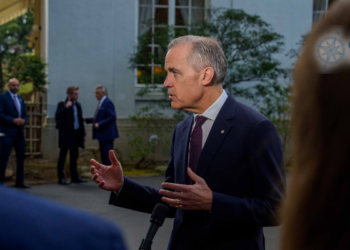
Few allies and partners of the United States want Donald Trump to be right. His methods are cruel, his rhetoric exhausting, his personalization of diplomacy genuinely dangerous. When Prime Minister Mark Carney received a standing ovation in Davos for defending multilateralism after flying to Beijing to sign agreements with Xi Jinping, the global commentariat cheered precisely because it represented everything Trump is not – elegant, principled, institutionally minded.
But wanting Trump to be wrong is not the same as him being wrong. And the uncomfortable possibility Canadian policymakers and other allies and partners of the US must now confront is that beneath the bluster, the threats, and the performative chaos, Trump may have identified something true about the world that Carney’s vision obscures.
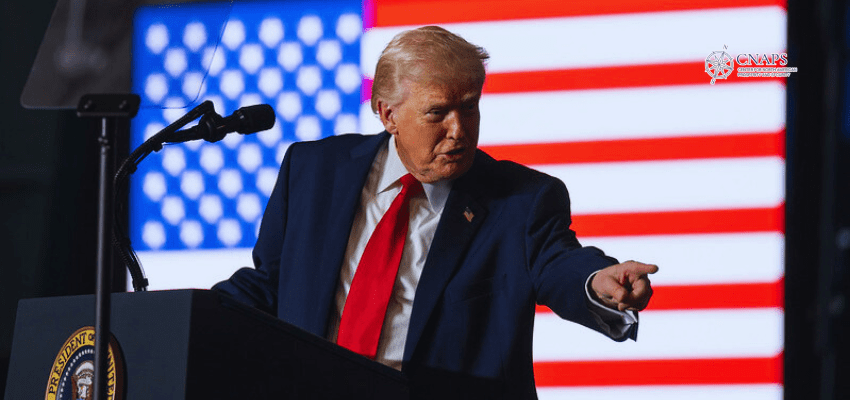
The core of Trump’s worldview is brutally simple. For Trump, the postwar international order became a mechanism for transferring American wealth and security to partners who offered little in return. Allies enjoyed protection while underspending on defence. Trading partners accessed American consumers while protecting domestic industries. China exploited every opening the liberal order provided to become a strategic rival funded by Western investment and technology transfer. This is not a sophisticated argument. It lacks nuance, ignores American benefits from the system, and treats complex relationships as simple ledgers. But the sophisticated arguments that dismissed these concerns for decades produced the present situation – where America’s principal strategic competitor grew powerful enough to threaten the order itself while allies remained dependent and underinvested. The experts were subtle and the experts were wrong.
Michael Beckley and Hal Brands made a version of this case in Foreign Affairs, arguing that assumptions about convergence and integration were always more aspirational than analytical. China did not liberalize. The Global South did not adopt Western norms. Russia did not become a satisfied partner. The institutions Carney celebrates were designed for a world that never fully arrived. Trump lacks the vocabulary to articulate this, but his instincts point toward the same conclusion. The system stopped working, and pretending otherwise benefits everyone except Americans asked to sustain it. When he demands that allies pay more, contribute more, and align more closely with American strategic priorities, he is not abandoning alliances. He is insisting they function as alliances rather than as charity.
Canada illustrates the problem precisely. The Commission on Foreign Interference documented years of Chinese influence operations – intimidation of diaspora communities, cultivation of elected officials, economic espionage – met with systematic Canadian inaction. Ottawa knew and did little. Defence spending remains below NATO commitments despite decades of promises. Arctic security is underfunded despite Russian and Chinese interest in the region. When Trump treats Canada as unreliable, he is not manufacturing grievance. He is responding to a documented record of a country that enjoyed American security guarantees while failing to secure itself against the very adversary America now confronts. This is not paranoia dressed as policy. It is observation.
Carney’s Davos speech offered an alternative vision, middle powers banding together to uphold rules, constrain great power excess, and preserve space for independent action. It sounds appealing. It flatters countries like Canada by suggesting their preferences matter independently of their power. But the Lowy Institute’s Asia Power Index offers a corrective. Canada sits at the lower end of middle power rankings, behind Japan, Australia, India, and South Korea. Rising states like Indonesia and the UAE are gaining ground while traditional middle powers stagnate. The coalition Carney imagines may lack the collective weight his strategy assumes. More fundamentally, middle power coalitions historically succeeded when underwritten by a great power willing to absorb costs on their behalf. That great power was America. Trump is explicitly unwilling to continue the arrangement on previous terms. Carney’s vision requires a sponsor who no longer wishes to play that role.
Then there is China itself. Carney’s Beijing visit assumed Canada could balance between great powers, maintaining productive relationships with both Washington and Beijing while preserving freedom of manoeuvre. Research from the Central European Institute of Asian Studies on Chinese economic statecraft suggests this middle path may be illusory. Beijing punishes countries that cross its interests regardless of prior engagement – export bans, tourism restrictions, regulatory harassment applied suddenly and without appeal. Japan, Australia, South Korea, and others discovered that economic interdependence with China creates vulnerability, not leverage. Canada has now positioned itself to face American tariffs for courting Beijing and eventual Chinese coercion when interests inevitably diverge over Taiwan, technology, or territorial disputes. The balanced position Carney seeks may not exist as a stable equilibrium. It may simply be a way station between alignment choices that cannot be permanently deferred.
Trump’s transactional approach violates every norm of alliance management. It treats partners as contractors rather than friends, measures relationships in dollars rather than shared values, and substitutes threat for persuasion. These are genuine costs. Kori Schake’s recent Foreign Affairs essay argued that America under Trump is becoming neither feared nor loved – merely unreliable. Allies are learning to hedge, diversify, and doubt. But this critique assumes the previous arrangement was sustainable, that allies would eventually meet their commitments voluntarily, that China would moderate with engagement, that institutions would address their own failures given enough time and goodwill. If none of that was true – if allies were already free-riding, if China was already exploiting openness, if institutions were already failing their stated purposes – then Trump’s disruption is less vandalism than demolition of a condemned structure. Breaking what no longer works may be prerequisite to building something that does.
The hardest part of this argument is separating Trump’s possible correctness about the world from his obvious unfitness to navigate it. He may be right that allies have underinvested. He may be right that China exploited Western naïveté. He may be right that multilateral institutions became mechanisms for diffusing responsibility rather than solving problems. None of this means his methods will produce better outcomes. Cruelty alienates. Unpredictability frightens. Personalized grievance substitutes ego for strategy. Trump could be directionally correct about the failures of the old order while being catastrophically wrong about how to build a new one. These possibilities are not mutually exclusive.
I do not admire Trump’s methods. The cruelty is real, the damage to diplomatic relationships genuine, the risks of miscalculation heightened by his chaotic approach to statecraft. But strategy must be judged by whether it aligns with reality, not whether it pleases editorial boards or conference audiences. Carney offered a vision that earned applause in Davos. Trump offered threats that earned condemnation everywhere polite people gather. The question is which better describes the world as it actually operates – a world where middle powers can chart independent courses through rhetorical solidarity and institutional loyalty, or a world where power remains concentrated, choices remain binary, and countries like Canada must ultimately align with the great power on whose security and market access they fundamentally depend.
Nobody wants Trump to be right. The possibility offends. But wanting is not analysis, and offence is not refutation. The painful possibility that Canadian policymakers must sit with is that Trump’s crude assessment of allies, adversaries, and the failing international order may be closer to truth than the elegant alternative Carney presented to standing ovations in Switzerland. Sometimes the rude guest sees what the polite ones have agreed not to mention.
Stephen R. Nagy is professor of politics and international studies at the International Christian University. Concurrently, he holds appointments as a senior fellow and China project lead at the Macdonald-Laurier Institute and a visiting fellow at the Japan Institute for International Affairs. The title of his forthcoming book is Japan as a Middle Power State: Navigating Ideological and Systemic Divides.