
This article originally appeared in the Center for Strategic and International Studies. Below is an excerpt.
By Jamie Tronnes and Richard Shimooka, May 26, 2026
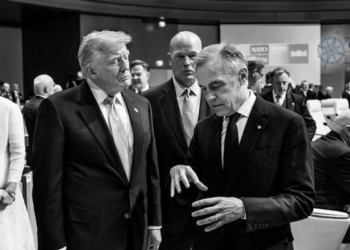
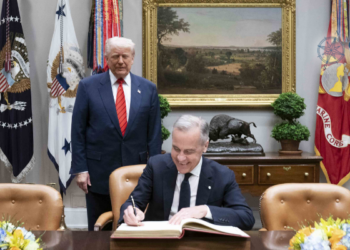
As for the complaint about Canada’s “rhetoric,” one of the authors of this piece has argued that when it comes to Prime Minister Mark Carney, the pen is mightier than the sword, in the sense that his speeches have piqued the White House more than Canada’s former status as a defense laggard. Colby’s social media announcement may come from a feeling of shock at the gall of Canadian grandstanding on the world stage, while Canada is still largely relying on the United States for military defense. The prime minister’s remarks at the World Economic Forum Annual Meeting in Davos, which portrayed a harsher geopolitical environment and called on middle powers to band together to resist economic coercion from hegemons, upset the White House and contributed to a tougher stance toward Canada. Indeed, in President Trump’s own Davos speech, he said that “Canada gets a lot of freebies from us, by the way. They should be grateful also, but they’re not . . . Canada lives because of the United States. Remember that Mark, the next time you make your statements.”
President Trump subsequently revoked Canada’s invitation to participate in his Gaza “Board of Peace” initiative; threatened Canada with a 100 percent tariff if the country solidified a trade deal with China, after initially saying it was a good thing to sign a trade deal; and later threatened to block the planned opening of the Gordie Howe International Bridge connecting Windsor to Detroit, accusing Canada of treating the United States unfairly during construction of the bridge and in other trade matters.
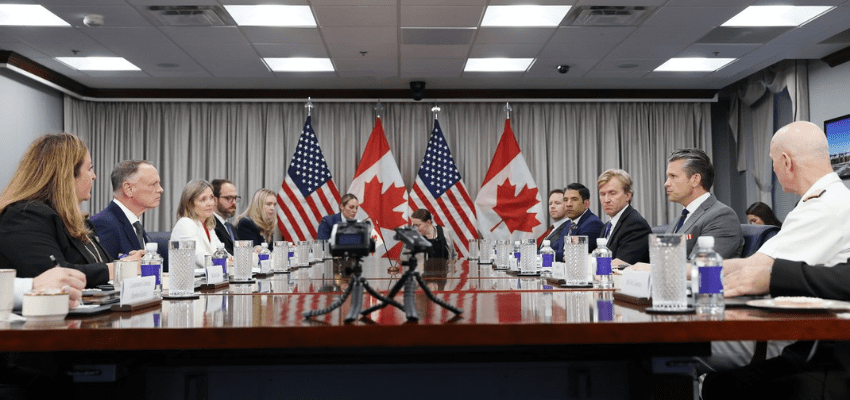
The Davos speech represents the international dimension of what Prime Minister Carney is trying to do within Canada; diversify its economy away from the United States, in addition to reducing Canada’s military dependence on it. The prime minister recently declared that “the days of our military sending 70 cents of every dollar to the United States are over.” The review of the F-35 purchase is consistent with this goal, as is Canada’s new Defense Industrial Strategy. Canada’s international rhetoric and its intentional distancing from the United States on military purchases likely contributed to the decision to pause the PJBD as much as the continuing perception in Washington of Canada as a laggard on defense.
Jamie Tronnes is the executive director of the Center for North American Prosperity and Security.
Richard Shimooka is senior fellow at the Macdonald-Laurier Institute.